I’d been speaking with country and folk music legend Judy Collins for about 15 minutes or so when she started to sing to me over the phone. That famous, clear-as-spring-water voice transcended the sterile soundscape of our cell phones and made me sit bolt upright in my chair as she sang “Goodnight, Irene” softly into her phone. The song was a big hit for Pete Seeger and the Weavers in 1950, but Collins, with a hint of mirth in that legendary voice, slipped in one of the verses from the version by blues singer Lead Belly.
“Goodnight, Irene, you sex machine,” Collins sang and laughed at once. “You know, after they heard Pete’s version, the Dove soap company wanted to hire him as a spokesperson. Which is right about when he said, ‘I’m out of here!'”
A musician, filmmaker and activist, Collins, 83, has almost as many incredible stories about her long career as she does albums. Almost. By her own recollection, Collins has something close to 55 albums, and counting.
It was her fifth album, 1967’s Wildflowers, that catapulted her to stardom. Roughly 50 records later, last year she released Spellbound, which was nominated for a 2023 Grammy Award for Best Folk Album.
Ahead of her performance at the Flynn Main Stage in Burlington on Sunday, April 30, I spoke with the legend herself about what keeps her going.
SEVEN DAYS: It’s been a busy year for you already. While you were touring Spellbound, it got nominated for a Grammy. How does it feel to still receive that sort of attention for your work?
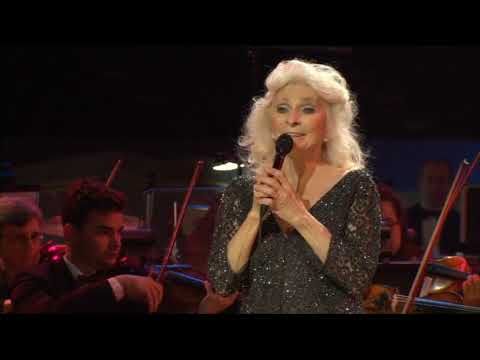
JUDY COLLINS: Well, it’s nice work if you can get it! It’s always nice to be noticed, especially for new material. I try to put an album out about every 18 months, but I like to look back, too, and think of songs or things I haven’t tried for awhile. For example, I’ve been playing the orchestral version of Wildflowers lately. We did it in Florida a little while ago with a 57-piece orchestra, which was just fabulous. In general, I always include a few of the hits, but I really like to move around in my catalog.
SD: Not surprising, considering how massive a catalog it is. So many other artists from your generation have retired from recording and touring. What drives you to keep creating?
JC: This is a lifetime of work for me. I’ve been at this game for 63 years now, and I’m starting to get the hang of it! [laughs]
A lot of the drive comes from being a workaholic, which I learned from my father. He had a radio show for 30 years, and he died young, at 57. He made his living singing the Great American Songbook, so I grew up singing Rodgers and Hammerstein and “Danny Boy” right along with all my classical training. I was playing Mozart with my teacher’s orchestra in Denver when I was 13.
SD: With all that skill and training as a classical pianist, why did you instead begin a career as a folk singer?
JC: Well, I remember hearing Jo Stafford sing “Barbara Allen” and really loving that. There was a version of “The Gypsy Rover” on the score for the movie The Black Knight, and that one really resonated with me as well. I fell in love with those songs, and I knew it was the only thing I really wanted to do.
When you’re an artist, you keep creating and moving; that’s the key. You don’t ever leave the essentials you learned behind. You may change your style, and I certainly have before, but as long as you devote yourself each day to being creative, that’s what it’s about.
SD: Your career as an activist has often paralleled your music, whether it was writing a song for Che Guevara or testifying on behalf of the Chicago Seven in 1969. You’ve been an outspoken critic against right-wing attempts to outlaw abortion as well. In light of the Supreme Court repealing Roe v. Wade and continued attacks on women’s reproductive rights, what are your thoughts on the current state of this issue?
JC: Men are creeps; that’s my view. Obviously, I’m speaking in a general sense, and there are plenty of good men out there, but look … they’ve been trying to get control of our bodies ever since they first met us in the Garden of Eden. Men have always, always wanted us to have a difficult time, and they’ve never wanted to take responsibility for creation and procreation. But, as Marcus Aurelius would say, it’s not forever. It’s part of human progress that we go forward a little, then backwards again.
SD: Do you still think it’s important for artists to be activists? If so, are today’s musicians politically active enough?
JC: I think artists, from the ’60s right up until today, have been energetically and amazingly active. I think we’re holding up a huge piece of the sky, really. I was raised at the dinner table to be an activist. My father spoke on his radio show about all the verboten topics in the day, like Vietnam and [Senator Joseph] McCarthy, and folks loved him for it. I think that had a lot to do with the fact that he made great music and told such good stories.
SD: It’s clear you have no intention of stopping anytime soon. What’s your advice to artists looking to maintain a long career?
JC: Well, it’s not the most exciting answer, but it’s really down to playing. I try to play the piano every day if I can. I write all my songs on piano, so I have to keep practicing. I listen to Bach to clear my head. And sing! Try to sing every day. Everybody should do that, really.
This article appears in Apr 26 – May 2, 2023.

Got something to say?
Send a letter to the editor and we'll publish your feedback in print!