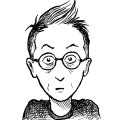
Art, they say, imitates life. For Vermont cartoonists Alison Bechdel and Harry Bliss, it sometimes works the other way around. Both have new books out in which autobiography and fiction have ways of cross-pollinating.
Bechdel, 64, is the Eisner Award- and MacArthur Fellowship-winning author of a trio of graphic memoirs, including Are You My Mother?: A Comic Drama (2012) and The Secret to Superhuman Strength (2021). Her 2006 memoir Fun Home: A Family Tragicomic was adapted into a Tony Award-winning Broadway musical of the same name; a movie starring Jake Gyllenhaal is reportedly in the works.

The Bolton cartoonist’s newest release, Spent: A Comic Novel, published last month, blurs the lines of traditional autobiographical work. For one, it’s fiction — mostly. Bechdel fans will recognize the book’s protagonist, though: a progressive, gay Vermont cartoonist named, um, Alison Bechdel.
In the book, cartoon Bechdel pals around with Mo Testa, Ginger Jordan, Sparrow Pidgeon and the rest of the gang from the real Bechdel’s long-running comic strip “Dykes to Watch Out For,” which was syndicated for 25 years in publications around the world — including this one. Spent rejoins the “Dykes” (and their kids) in the present day, 17 years after we last saw them in 2008.
“I just love Vermont so much, so it was a good chance to say it.” Alison Bechdel
Bechdel’s Spent proxy shares obvious similarities to the real thing, but her backstory blends fact and fiction. Cartoon Bechdel is fresh off penning a best-selling memoir that’s become a cultural phenomenon (true) and has been adapted into a successful TV show (close enough). She and her wife, Holly Rae Taylor (true), run a pygmy goat sanctuary in rural Vermont (nope) and are increasingly worried about the uncertain state of the world, especially climate change and unchecked capitalism (very true). Her solution: Write a fiery memoir to inspire humanity to save itself. Hilarity — and razor-sharp cultural commentary — ensue.

Bliss, 61, also subverts the conventions of autobiographical storytelling in his latest. Released in April, You Can Never Die: A Graphic Memoir traces the New Yorker cartoonist’s life from his rough-and-tumble childhood in Rochester, N.Y., through art school in Philadelphia, moving to Vermont and eventually buying J.D. Salinger’s old house in Cornish, N.H. (He currently splits his time between there and Burlington with his wife, Sofi Dillof.)
Along the way, Bliss dishes unflinchingly about his dysfunctional family; the daughter he and a girlfriend gave up for adoption when he was a young, struggling artist; and myriad other aspects of his life. He’s as candid about his sometimes harrowing relationship with drugs and alcohol as he is about his often brilliant working relationship with comedian Steve Martin. The duo has published two best-selling books together, most recently Martin’s Hollywood memoir Number One Is Walking: My Life in the Movies and Other Diversions in 2022.
“Politics don’t interest me … unless I can draw Patrick Leahy doing a bump of cocaine.” Harry Bliss
If that material sounds like the makings of a good, juicy memoir, it is. But You Can Never Die is notable less for its lurid details than for how Bliss presents his life: through the lens of his relationship with Penny, the dog he shared with Dillof. Set in 2021, the memoir functions as both a life story and a meditation on grief — for Penny, who died first, then for Bliss’ parents, who both died within roughly a month of each other as he was working on the book and with whom he had a fraught relationship.
As you might expect from someone whose home is practically an art gallery, Bliss’ memoir was curated as much as it was written. He intersperses his essay-ish recollections and observations with journal entries, photos and other ephemera, including comics from his long-running syndicated strip “Bliss.” The result is nakedly honest and sometimes quite sad. But it is also very, very funny.
While they differ in autobiographical scope, both books reflect their authors. Spent is smart, sarcastic and zany, with an unmistakable current of warmth and kindness running just below the surface, much like Bechdel herself. You Can Never Die is wild, weird and sweet — and a little dark, much like Bliss.
Recently, Seven Days sat down with Bechdel and Bliss as the two cartoonists spoke about their new books and a host of other topics, from creative processes to grief to the difficulty of drawing goats.
SEVEN DAYS: Alison, Spent is fiction but also semi-autobiographical. Harry, your book is a memoir but not in a traditional sense. Both are pretty unconventional, so how do you guys describe them?
ALISON BECHDEL: My book is a kind of a mashup of my old comic strip, “Dykes to Watch Out For,” and my more recent books, which are memoirs about me and my own life. I’m calling it auto-fiction because it’s sort of about me but it’s not really a memoir. It doesn’t reveal dark secrets about my life like Harry does in his book.
HARRY BLISS: Mine is a memoir that’s kind of anchored by the death of Penny, our dog for 17 years. And in the course of dealing with just horrible grief, things about my life opened up, journaling and writing about my childhood. And then, along with all of that, kind of organically, sadly, my parents both died. So, yeah, it was like a two-and-a-half-year period of grief.
So there had to be humor in there. I had to disperse cartoons. The journal things had to offset some of the grief, or the whole book would just be a fucking downer. But it was like therapy, in many ways. It was very therapeutic to write.
AB: You know, I only read it about three-quarters of the way through and haven’t had time to finish. But I was like, What is the deal with his parents? Are they going to read this? So … I guess not.
HB: Yeah, they died about a month apart. So the book pretty much ends with that.
SD: So you’ve got that part of Harry’s tale to look forward to, Alison.
AB: Well, it was a good choice. There’s a lot of dark stuff in there but punctuated by these gorgeous drawings.

SD: Harry, what did you appreciate about Spent?
HB: The thing I loved the most about Spent, first of all, is: It’s just sweet. It’s just a great, nice story about a community and this bunch of friends — and the kids. I loved all the activist kids doing stuff; it reminded me of my son in Brooklyn. And I just related to it all. I related to the landscape and the guns and Holly … everything Holly does. It was super familiar to me on so many levels.
AB: It was fun to write about Vermont. When I was doing my comic strip, I always kept that location generic and never pinpointed it, so everyone could pretend it was their town. But I always missed being able to talk about the specific things about a specific place, and I could do that in this book. I just love Vermont so much, so it was a good chance to say it.
HB: It felt like that. I love all the little asides — what someone’s reading, the Seven Days. You guys get a lot of press.

SD: [Laughing.] Aw, thanks, Alison!
AB: Harry, I was surprised by the range of your drawing. You’re such a good caricaturist. Why don’t you do editorial stuff?
HB: Politics don’t interest me … unless I can draw Patrick Leahy doing a bump of cocaine.
AB: [Laughing.] That was pretty good.
HB: There are so many people who do that better than me, and they have the pulse on what’s going on in the world. I just don’t. I would feel like a bit of an impostor.
SD: Fortunately, you do other things very well, Harry.
AB: Your drawings of Penny are just so wrenching. And, like, it’s a white dog. It’s basically negative space, but you make these incredible, nuanced portraits with so much feeling.
HB: I mean, I could say this: You could draw all your characters from memory.
AB: That’s true. But you weren’t just drawing from memory; you were drawing from life.
HB: Or from photographs. It’s kind of a meditation, waking up in the morning and drawing.
AB: I like that little note you made about cats and how they just stay in the same position forever — and you thought one was dead, but you were drunk. But that’s not true: Cats are constantly fucking moving. They’re impossible to draw. But you just draw all animals so beautifully.
It was hard drawing those fucking goats, because goats are just kind of creepy looking. If you look at their slit pupils, they look like they’re possessed. And I couldn’t draw them with those accurate pupils, because it made them look not appealing. So I had to give them cartoon eyes.

SD: Alison, what else struck you about Harry’s book?
AB: You’re becoming more and more of a recluse, you say, as you hole up down in Salinger’s old place. But I was already thinking as I read the book, like, You’re starting to sound like Holden Caulfield.
I wrote one down. You said, “Sometimes, if you pay too close attention to things, they can depress the hell out of you.”
That is very Holden Caulfield. Harry’s becoming possessed.
HB: It’s probably subconsciously intentional somehow, because that was a piece about going to Jesuit school. Yeah, it’s very Holden Caulfield.

SD: Alison, what was it like to revisit the “Dykes” characters all these years later?
AB: It was salvational. I mean, things have just been so crazy in the world, and when I got the idea to include them in this new story, it was just like, Oh, my God, here’s my old friends. I’m so happy to see you again. You’re still doing the work you’ve been doing all along. And it just was really great.
I would use those characters when I was writing the strip to make sense of the chaos of the news. The news is hard for me to process unless I’m making stories out of it. So I would have them all discussing it and taking different positions. And it was nice to be able to access that again and have a way to process the horrors that were assaulting me daily when I was trying to work and, instead, doomscrolling, much as Alison does in the book.
SD: How does that square with real-life Alison?
AB: When I finally had a chance to read the book as a whole, I could see that Alison’s creative process — which is basically just like attention deficit disorder, as she moves from one project to another project and then gets distracted to another project — is very much how I’ve been working ever since Trump got elected the first time.
And eventually I can put something together. But I just feel crazy some days, sitting in my basement trying to write comics when the world is going up in flames. It just feels hopeless. But the characters gave me hope.
HB: I think that’s what I like so much about the book. It’s clear you’re sitting there and you’re freaking out at what’s on the news, but weaving through all that is the sense of love and community and this group of people who are also still fighting and working to do whatever they can do to make a difference, which is unique — though maybe not in Vermont.
AB: Yeah, maybe not so unique in Vermont. But it’s still unique for people as they age to remain engaged in that way. And that’s what was so moving, because what I was trying to write about in the book is, the older you get, the more bought into the system you get, the less engaged you are with real life, with real struggles.
When I was younger, I was much more active and engaged and seeing people doing social things and political things, and I just don’t live like that anymore. But I feel like I have to; I need to really change.
HB: I mean, I might say that you haven’t changed, because it’s in the book. You’re putting it out there.
AB: That’s true. I don’t like to say that my cartoons are my political work, but in a way they kind of are, and I’m excited to go out on tour with this book, the launch, just to be with people in the same room and talk about all this stuff. So that’s, I think, a really good thing.
HB: That’s also true. An extension of the book is you engaging people and then motivating people and inspiring people.
I don’t. I can’t. I’m a loser. I don’t do political comics. I don’t comment on it. And it’s a conundrum. I have some guilt around that. Every now and again, I’ll post a drawing on Instagram — I did one of Trump with a golf [club] up his ass. But when I’m doing stuff with Steve [Martin], he stays away from it. So I definitely have guilt around it, because I have pretty strong feelings about things.
SD: I would say that both political and nonpolitical work are important right now. People like to read things they can identify with politically, but it’s also nice to have an escape.

AB: Especially if you’re connecting with all kinds of people. Like, MAGA people are not gonna read my book. But they might see your cartoons and think, Oh, that’s really cool. And I miss that, too.
One of the things I write about in Spent is, Alison has this fantasy of how TV was in the old days, when it really did reach a mass audience and everyone was watching the same shows every night. And yeah, they might have been a little racist and sexist, but everyone was watching them together. And there’s something to be said for that.
And so she has this fantasy that she’s gonna, like, bring the country together with her own TV show. It doesn’t go well. But I do feel like we’ve just become so fragmented. No one has the same cultural references anymore, and it’s really sad — dangerous, not just sad.
SD: Speaking of sad, both of your books deal with heavy topics, albeit in different ways.
AB: Your story of losing Penny was just really powerful, Harry. And as someone who has lost a pet, I always think, like, This is just unbearable. How do people live with this loss? I had a cat who got taken away in the night, like, two years ago, and I still haven’t recovered.
HB: I don’t think we ever really recover. I feel like it’s almost some kind of weird penance, the suffering or loss. It’s like a necessary penance for just being alive. But now I have a new dog, Junior, and there’s a hovering sadness every moment I’m with him, because I know it’s gonna happen again.
AB: Well, it heightens your appreciation for life, knowing what loss is like. But also, people talk about how our love for animals is more pure because it’s not mixed up with all these complicated emotions we have for people. And I mean, your parents just sound so difficult.

HB: Yeah, it’s a weird thing. They were … not great parents. But the thing that I took away from when they died is that I missed them. Death is just … what a fucking trip that is to deal with. How would I know that I would miss my parents, that I would literally miss all of their malfunctions, all of the things that I didn’t like about them?
AB: What were you going to do if your parents didn’t die? Would you have taken all that stuff out about them — just out of curiosity?
HB: No, I don’t think so. That’s a really good question that I didn’t think about. But at the end of the book, there’s a kind of reconciliation, I guess, if that’s the right word. I was just so bummed, and I didn’t want my mom to die.
I don’t think my dad would have cared as much [what I put in the book]. He probably would have said, “Yeah, that’s true. You know, we hit you, and I wish I hadn’t.”
AB: We got hit a little bit. Mostly my brothers got hit. I escaped it somehow. But yeah, my dad was a little crazy, too.
You’ve got that scene of your dad just, like, reaching around trying to hit whoever he could in the back seat.
HB: That definitely happened. [Laughing.]
AB: [Laughing.] Yeah, yeah, we laugh. It’s crazy, you know?
HB: I know, right? Yeah, in the moment, in the moment, you don’t even know that. You’re scared. You don’t know.
AB: I only remember this one time because I had a friend with me, and I was like, Oh, my God, what does she think of this? But of course, we went through it all the time. It’s just your world, until someone else’s perspective is there.
HB: If I had the awareness to think, This is fucked up — but you don’t. It’s just, This is the way things are. And you realize that, Wow, pretty much my whole childhood was fear and anxiety.
AB: Yeah. It turned us into cartoonists.
This interview was edited for clarity and length.
The original print version of this article was headlined “Drawn Together | Vermont cartoonists Harry Bliss and Alison Bechdel interview each other about their new books”
Related Stories

From the Publisher: When Harry Met Alison

Comic Timing: Crossing Lines in the Cartoon Issue
This article appears in The Cartoon Issue 2025.

Got something to say?
Send a letter to the editor and we'll publish your feedback in print!