The Vermont Granite Museum is known for showcasing the history and craft of central Vermont’s stonecutting industry. Dating back to 1895, the vast, 28,000-square-foot granite shed houses plaster models of monuments, hands-on carving displays, tools and archival photos, as well as small shows of sculpture by local stone carvers. But until now it hadn’t mounted an exhibition of contemporary art from outside that tradition.
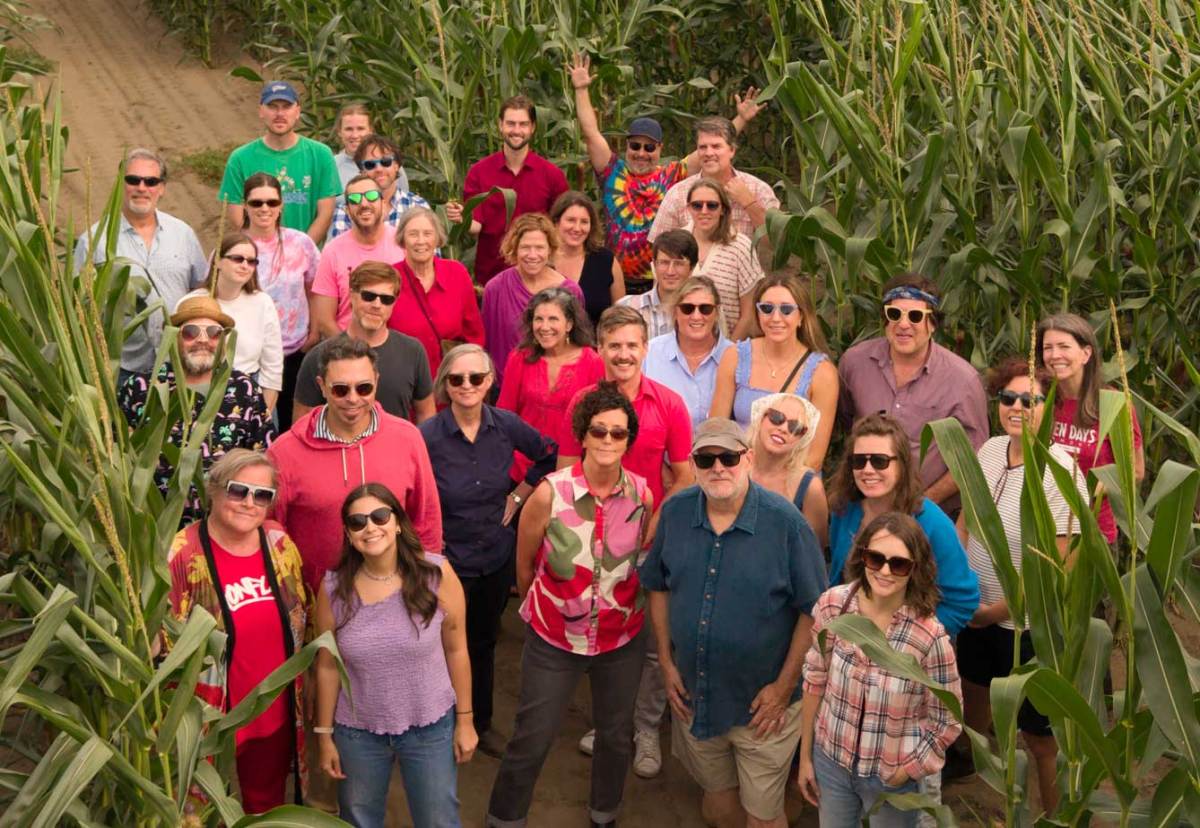
“Fracture Point,” on view until the museum’s season ends in October, brings together 10 artists whose projects grapple with the labor, history and social effects of the stonecutting industry and touch on its future as well. All the artists, who range in age from late thirties to early sixties, are recent alums of the MFA in Visual Art program at Vermont College of Fine Arts. They include Patty Meriam of Barre, who also curated the show.

Since graduating in 2024, Meriam and her cohort, as well as a few alums from 2023 and 2025, have been organizing shows around social justice themes in their various cities. (Because VCFA’s program is long-distance, students live all over the U.S. and abroad.) Meriam, a historic preservationist, has been involved with the museum since about 2002, serving on its board and for a couple of years as executive director.
When she joined, she said, “we had dirt floors and no exhibits at all.” Since then, the museum has made steady progress with the installation of luxuries such as concrete floors and bathrooms. It now brings in busloads of tourists and educational groups, hosts resident stone-carving artists, and runs programs such as last Saturday’s annual Granite Festival. In terms of contemporary art, Meriam said, “I’ve been wanting to do something here for a long time.”
All the artists in the show incorporate research into their art practice, learning about an issue or historical event and then creating something to articulate a story or point of view. After settling on the broad idea of looking at labor and digging into the museum’s online archives, five of the artists participated in a residency this summer. In addition to touring the Adams manufacturing plant, stone monuments at Hope Cemetery and the former quarry sites at the Millstone Trails, they tried their hands at stone carving in a workshop with Heather Milne Ritchie.
None of the exhibiting artists had ever worked in the medium before, Meriam said, and it informed their other work through a visceral experience of “the feeling and the hardship on the body when you’re carving, and the dust.”

Bodily impact is a theme of several works. Naomi Even-Aberle’s “Body and Breath of Labor” combines archival photographs on chunks of stone with a soundtrack of shop noises, coughing and labored breathing, referencing the widespread lung damage suffered by stone workers. Jamie Zimchek’s “When the Dust Settles” uses screen-printed reproductions of granite-industry newspapers, folded into the same kind of paper hats workers made daily to protect their scalps from the fine dust.
Several pieces focus on the experience of women and families, including Jessie Keating’s “We Want Our Bread and Roses,” a painting that recalls the 1912 “Children’s Exodus,” when 35 kids of striking immigrant workers in Lawrence, Mass., came to live with sympathetic workers in Barre. Meriam’s piece is a gumball machine that instead delivers facts about child labor, a practice she warns is again on the rise.
Two works imagine the impact of AI on workers. Susan Snipes’ “Uncertain Futures” is a series of paper shooting targets printed with clip art of different workers, including a stone carver, in reflective gold. Renée Jett’s stop-motion animation “Sarjena and the Eaters” is a powerful little allegory about how human connection and an embrace of labor will help us prevail against the all-consuming machines. In this setting, it’s easy to believe.
“Fracture Point,” on view through October 31 at Vermont Granite Museum in Barre.
This article appears in Sept 24-30 2025.

Got something to say?
Send a letter to the editor and we'll publish your feedback in print!