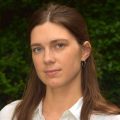
Nabwia was just 17 when she left Sudan for the chance at a better education. The country’s civil war had already forced her family from their home. She left them to finish school in Germany.
A high school diploma from United World Colleges in Freiburg earned her an automatic scholarship at about 100 universities, and she set her sights on Middlebury College. She was accepted in spring 2025 — right before President Donald Trump issued a sweeping travel ban for citizens from 19 countries, including Sudan.
Her student visa was granted just days before the ban went into effect, Nabwia said. She’s now a first-year student at Middlebury studying economics. Seven Days is using only her first name because she fears being targeted by the American government.
“It was a miracle that it happened in the nick of time,” she said of obtaining her visa. But the document, which allows only a one-time entry into the U.S., is also a kind of trap, she said. “If I go out, I won’t be able to come in again.”
In the past, international students have been able to go home during long breaks and confidently reapply for visas to continue their studies in the United States. But the Trump administration’s hardline stance on immigration means some international students are effectively trapped inside U.S. borders, separated from their families for years. They are compelled to weigh their desire to visit their home against the risk of not being able to return to finish their education.
“I had to stop my emotions and my thinking of, I’ll be away from my dad, and go with the rational decision of, Yes, I’ve worked toward this. I can only try; I can’t stop,” Nabwia said of her determination to get her degree.
Last year, Vermont’s colleges hosted 1,279 international students, a small fraction of the 1.1 million across the country, according to the nonprofit Institute of International Education.
So far, the political changes in Washington have not caused a significant drop in the number of foreign students, according to administrators at Vermont schools. But they say some prospective students have already been denied visas because of their nationality, and in April, the U.S. government revoked a visa.
At Middlebury, young people from abroad have comprised a growing share of the student body, rising from 10 percent in 2016 to more than 13 percent today. Out of a total undergraduate enrollment of 2,653 students this year, 351 represent 69 countries outside the U.S. They include students from Afghanistan, Namibia, Iraq, Venezuela, Palestine and Nigeria — all countries under Trump’s current travel ban. Middlebury spokesman Jon Reidel did not make an administrator available to discuss the college’s international students.
At the University of Vermont, a big recruitment push that began around 2013 drew foreign students in record numbers. Many came from China through a partnership with the Global Gateway program that has since ended. After peaking in 2017, the numbers have dropped by half, to just 437 this semester, or about 3 percent of UVM’s 14,425 students. Most of the foreigners are graduate students.
“The international student marketplace is über competitive,” said Jay Jacobs, UVM’s vice president for enrollment. “UVM and the state of Vermont writ large just isn’t a destination international students are flocking towards.”

Jacobs said international recruitment isn’t a big priority for UVM right now, and he doesn’t expect it will be anytime soon.
“The current state of the world is just not in a place where I think we’re going to be able to win international students,” he said. “I don’t think the United States is a destination international students want to come or feel safe coming to.”
Private high schools have also long attracted international students. At St. Johnsbury Academy, which has hosted them since at least the 1940s, 125 of the 990 students come from abroad. The numbers have fallen since the COVID-19 pandemic, headmaster Sharon Howell said.
Last fall, three Nigerian students who had been accepted at St. Johnsbury had their visas denied because of the travel ban, she said. In addition, the political turmoil in Washington has made it harder to reassure families who are wary of sending their high school children to study in the U.S.
“People certainly are unnerved,” Howell said. “I really hope the climate shifts. Because these are really just precious parts of our community and we treasure them. I don’t want families to think for a minute that we feel differently, and the current climate can make it challenging.”
The climate already has impacted the daily lives of foreign students in Vermont.
César Camacho, 19, was born in Florida and is a U.S. citizen, but he grew up in Ecuador from the age of 4. When it came time to apply to colleges, Ecuador was in the midst of a brutal surge in gang violence. When Camacho’s father googled “safest campus in the U.S.,” the University of Vermont was one of the first results, he said.
Camacho, president of UVM’s International Student Club, came to Vermont in 2023 and is now a junior majoring in political science and global studies.
“I always knew I was going to come to the U.S. because I’m American,” he said. “It’s about seeking better opportunities. I want a better future for myself and for my family.”
Since Trump took office, though, Camacho has started carrying his passport with him at all times. At his mom’s request, he downloaded an app on his phone that allows her to track his location.
Even though I’m American, I’m still scared of any kind of interaction with ICE.
César Camacho
“Even though I’m American, I’m still scared of any kind of interaction with ICE or any police officer in the U.S.,” he said.
At Middlebury, Nabwia, the student from Sudan, is navigating these challenges with her Syrian roommate, Christa, who Seven Days is only identifying by her first name because she, too, fears drawing attention to herself.
The two young women have a lot in common. They both left their war-torn home countries as high schoolers to study at secondary schools run by United World Colleges — Christa in Italy and Nabwia in Germany.
Both earned scholarships to Middlebury and came with big hopes for their futures and the opportunities that an American education would afford them. Christa, 19, is studying architecture, hoping to one day help rebuild her country, which has been ravaged by more than a decade of civil war.
Nabwia came to Vermont knowing she would not be able to return to Sudan to see her dad for four years, but Christa left her family in Syria last August after promising to return home this summer. Then in December, as their first semester was wrapping up, Trump expanded the list of countries on the ban list, adding Syria and 20 others.
“Now we’re in the same boat,” Christa said of their separation from home. She considered looking for a program in a different country, but it felt like too big a sacrifice.
“Coming here, I have way more freedom in education,” she said. “This is a very important and valuable thing I don’t want to lose.”
But it has come at an unexpected cost. She and Nabwia have watched their peers return home for Christmas break and sign up for semesters abroad while they must stay on campus.
“I feel captured,” Christa said.
For now, the roommates have decided to stay in Vermont. They’ve survived the distance and uncertainty by talking with their families over near-daily video calls on WhatsApp — and by leaning on each other. ➆
The original print version of this article was headlined “Worlds Apart | Trump’s policies have prevented some foreign students from coming to Vermont — and complicated the lives of others who did”


This article appears in March 4 • 2026.

Got something to say?
Send a letter to the editor and we'll publish your feedback in print!