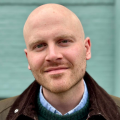
Jason Eaton can mount an insanity defense when he goes to trial for the shooting of three Palestinian American college students in Burlington even though he missed the deadline to raise the issue, a judge ruled on Friday.
Eaton, 51, has been in prison since November 2023, when prosecutors say he stepped off the front porch of his Burlington apartment and, without saying a word, opened fire on the three young men, all 20 at the time, who just happened to be walking by. The shooting left one of them paralyzed from the waist down.
Eaton has since claimed that he was acting on behalf of the CIA but has repeatedly rejected the idea of arguing that he was legally insane at the time of the crime. He finally relented last month upon learning that he had been deemed competent to stand trial a second time, and his attorneys notified the court on April 17, just six weeks before his trial was set to begin, of their intention to raise the defense.
Prosecutors said the notice came far too late and urged Judge John Pacht to deny Eaton the ability to raise the defense. And on Friday, Pacht said he appeared to have a strong legal justification for doing so. But citing the “extraordinarily serious” nature of the crimes, and the fact that Eaton’s mental health has been in question throughout the case, Pacht said he would allow the defense — with conditions.
He told Eaton’s attorneys that he wants to see a written statement in the coming days that outlines exactly what their retained expert plans to be able to say at the trial, including whether his opinions are based on a “reasonable degree of medical certainty.”
Pacht left open the question of whether he would delay the trial from its current June 1 start date in light of the developments. Eaton’s attorneys, who have asked for more time to prepare, have warned that sticking with the current schedule will provide them fodder for an appeal should he be convicted.
But Pacht said he will defer the matter of timing to state prosecutors, since he believes they’re the ones who will be most affected by Eaton’s eleventh-hour change of heart.
The ruling puts prosecutors in a tough position.
Finding an expert who is willing to testify on Eaton’s state of mind at the time of a crime nearly three years ago and could also complete the necessary evaluations on such a short time frame is proving difficult, they say. They told Pacht on Thursday that they’ve called a dozen psychiatrists and psychologists around New England this week with no success.
And while delaying the trial would give them more time to find an expert witness, it could undermine another, equally important part of their case: the presence of the victims at the trial.
Two of the three young men graduate from college this month and have told prosecutors that they plan to leave the U.S. immediately after the trial. The other is already living overseas and has arranged to return to the country for the scheduled trial dates.
It’s unclear whether any of the three would be able to accommodate a later trial, prosecutors said.
“They deserve to be here in person,” Chittenden County State’s Attorney Sarah George said during a hearing on Thursday. “The jury deserves to see them and hear them in person.”
George told reporters after Friday’s hearing that she will notify Pacht of her decision after speaking with the victims.

Got something to say?
Send a letter to the editor and we'll publish your feedback in print!