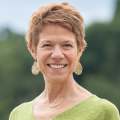
Sarah Diedrick began the June meeting of the book club she facilitates by helping the hosts set up camp chairs in their grassy backyard, light mosquito repellent sticks and arrange snacks on a patio table. Members hugged as they arrived and sat down with plates of flat pretzels, crusty bread, hummus, cheese and strawberries. Then Diedrick opened with the customary discussion of ground rules.
“This isn’t your average book club,” she began, although most of the six members seated with her in a circle were regulars. Diedrick, 35, started Sex Ed Book Club shortly after enrolling in an online program to become a certified sex educator. Many of her classes were prerecorded, she said, “and I wanted real, live information — like, what are people going through right now? What are they worried about? What are they celebrating? What do they need help with?”
Knowing would make her a better sex educator, she reasoned, but she couldn’t find a place where people talked openly about sex. So she created one — “like a research project.”
The Burlington-based club launched online in January 2022 and has met every month since, with in-person gatherings since April. Built on a foundation of mutual respect, the club “is a group of open-minded people who are curious about celebrating, exploring, and expanding their sexuality,” Diedrick explains on her website.
Diedrick, who is scheduled to receive her certification from the Institute for Sexuality Education & Enlightenment on August 1, selects the books. Topics have included desire, non-monogamy, bisexuality, asexuality, intimacy within friendship, satisfaction in long-term relationships and nonsexual pleasures.
“I call it the sex ed you always deserved,” book club member Ellie Masson said.
Exposing myths and dismantling rigid societal expectations are typically on the agenda. The media’s portrayal of sex has historically “been so prescriptive,” Diedrick said. “This is who you should have sex with. This is how you should have sex. This is what sex is.” Sex is broader than that, and sexuality is broader still — “an entire ecosystem,” Diedrick said.
Typical meetings attract 10 to 25 people, most in their late twenties to mid-thirties. Cis men aren’t allowed, though Diedrick grappled with that decision. She discussed it with club members, she said, “and it was pretty unanimous that people felt safer talking about these things without cis men present.”
Still, participating requires a certain level of bravery, according to member Rebecca Roman. “It’s scary to ask these questions,” she said, because society teaches us not to ask about sex. “It’s in the privacy of your home. You don’t talk about it. And how much harm has that caused?”
Forty-four percent of the more than 5,000 single people whom match.com surveyed last year said they would have healthier and better relationships now if they had received more comprehensive sex education when they were younger. Between 77 and 91 percent said they had been taught about puberty, reproduction, abstinence and sexually transmitted infections. But 26 to 39 percent said they received no education at all about sexual orientation, gender identity, how to give and ask for consent, and how to talk about sexual desires with a partner.
Diedrick wades into all of it. The intimate discussions she facilitates accelerate friendships, member Emma Spett said, and deep ones have formed. Members have come out as a result of the book club, Diedrick said. Others have left relationships after gaining the confidence to explore their desires and needs.

Books on the reading list have included Jessica Fern’s Polysecure: Attachment, Trauma and Consensual Nonmonogamy and Jen Winston’s Greedy: Notes From a Bisexual Who Wants Too Much. Discussing such titles can be difficult, hence the ground rules: Don’t “yuck” anyone’s “yum”; assume good intent and attend to impact (step away if you need to leave a conversation or follow up later with a speaker privately); lessons leave, stories stay; make space, take space (feel free to talk or listen, but if you typically talk, allow others to have a chance, and if you usually sit quietly, consider offering an opinion); and, finally, the group is not sex therapy or a place to receive specific advice.
With plates filled and rules established, Diedrick turned to the June book, Miranda July’s racy new novel, All Fours. “I thought the writing was so good,” she said, then read a few of her favorite passages aloud. The scene could have played out in any book club in any backyard.
The 90-minute discussion was lively, funny, thought-filled and — unlike many book club meetings — entirely focused on the book. July’s novel is a departure for the group, which typically reads nonfiction. In her story, a 45-year-old artist sets out on a cross-country road trip only to pull off the highway 30 minutes later, spend $20,000 redecorating a room in a nondescript motel, and proceed to upend the life she has with her husband and child. An affair with the decorator’s husband is the first erotic impulse she follows in a mad dash to pursue pleasure before menopause arrives to extinguish her sexual desire — which is what she expects.
An unnamed first-person narrator tells the story, and club members agreed that the device took them inside the protagonist’s head. “I was just like, Whoa, this is crazy in here!” Emma Waters said. “She kind of has the impulses of a toddler,” Charlotte Dworshak observed.
Roman found the protagonist’s spontaneity both refreshing and disturbing. Her journey of self-discovery “was phenomenal and beautiful,” Roman said, but she was lying to her husband and child. “What if your self-discovery is hurting everyone around you? That’s not fucking OK.”
When Spett joined the book club, she wasn’t looking for conversation about sex as much as she yearned for community. “This felt like a really fun, almost taboo community to be a part of,” she said. Through it, she has forged friendships and found a degree of liberation. She has appreciated discussions about queerness and challenges to heteronormativity, she said, citing the message she took from Emily Nagoski’s book Come Together: The Science (and Art!) of Creating Lasting Sexual Connections: “Nothing you’re doing is not normal. Everything is normal. Anything you want is fine.”
“I’m in a phase of life where there’s a lot of expectation around marriage and kids and tradition,” said Spett, 30. “And to hear that, in this moment in history, we don’t have to do anything that doesn’t feel true to who we are has been really nice.”
Sex Ed Book Club is “set up for brave vulnerability,” Roman said. Members support each other. “Everyone’s showing up with just an open mind and an open heart.”
Spett credits Diedrick for the club’s success: “It’s like she’s essential to the recipe … I think she just has a really grounded and joyful energy.”
Diedrick wore wide-legged white pants printed with a bold black windowpane pattern that allowed her to move around the backyard with the same sort of ease she projects while navigating thorny discussions. Five foot two and soft-spoken, she can talk about masturbation, demisexuality and desire the way a diner waitress might list the lunch specials: It’s all good, honey.
Diedrick grew up in Connecticut and attributes her comfort level with talking about sex to the six years she spent at a small all-girls school. “I didn’t have to worry about appearances for boys and all of that pressure, and I felt like I could really be myself in my body,” she said. “We were talking about sex a lot. We were really comfortable with each other.”
She graduated in 2011 from the University of North Carolina at Chapel Hill with a major in English and a minor in creative writing, then moved to Vermont in 2012 to teach yoga. Lori A. Brotto’s book Better Sex Through Mindfulness: How Women Can Cultivate Desire made her realize that what she was teaching in restorative yoga could be applied to desire and pleasure.
Another author’s work cemented Diedrick’s resolve to become a sex educator, a path that has led not only to Sex Ed Book Club but also to a weekly Substack newsletter about pleasure called “Intimate Distance,” which features a Q&A column once a month. Her podcast is in the works. Nagoski’s first book, Come as You Are: The Surprising New Science That Will Transform Your Sex Life, refuted lessons Diedrick had been taught, she said, “and for the first time, I felt seen in my sexuality.”
She added, “I want to help other people feel this way.”
The original print version of this article was headlined “All Lit Up | Sex Ed Book Club busts myths and sparks lively conversation”
This article appears in The Cartoon Issue 2024.

Got something to say?
Send a letter to the editor and we'll publish your feedback in print!