If my father had been with me on Saturday at Bennington Centre Cemetery, he would’ve died and gone to heaven — if he hadn’t already achieved the former.
At Vermont’s oldest cemetery, I found a few of his favorite things: U.S. history, poetry, peace and quiet. He also loved graveyards themselves and this one — with a mountain view; stones carved with birds, flowers and angels; and a grassy path to a gravestone etched with an epitaph for the ages — is hard to top.
The cemetery is on Monument Avenue in the historic district of Bennington, next to the Old First Church. The people buried on its grounds include 75 soldiers who fought for the nation’s independence, five Vermont governors and the author of the state’s Declaration of Independence.
At the site, a history of the graveyard notes that in 1935 the Vermont legislature declared the church and the cemetery Vermont’s “Colonial Shrine.” In its declaration, the state pays tribute to those who “labored for the stability and prosperity of Vermont.”
Near the entrance to the cemetery is the grave of Mary Tilden Dewey (1751-1835), who baked 80 loaves of bread in her beehive oven while revolutionary soldiers slept on her floor. She made the bread before the start of the Battle of Bennington, which took place on August 16, 1777; her husband, Eldad, delivered it to the troops.
Dewey then intended to take her children and ride to safety on their horse. But a surgeon on his mission to treat wounded soldiers needed the steed, and Dewey was left without a horse. To find out what she did, go to the cemetery and read the sign by Dewey’s gravestone.
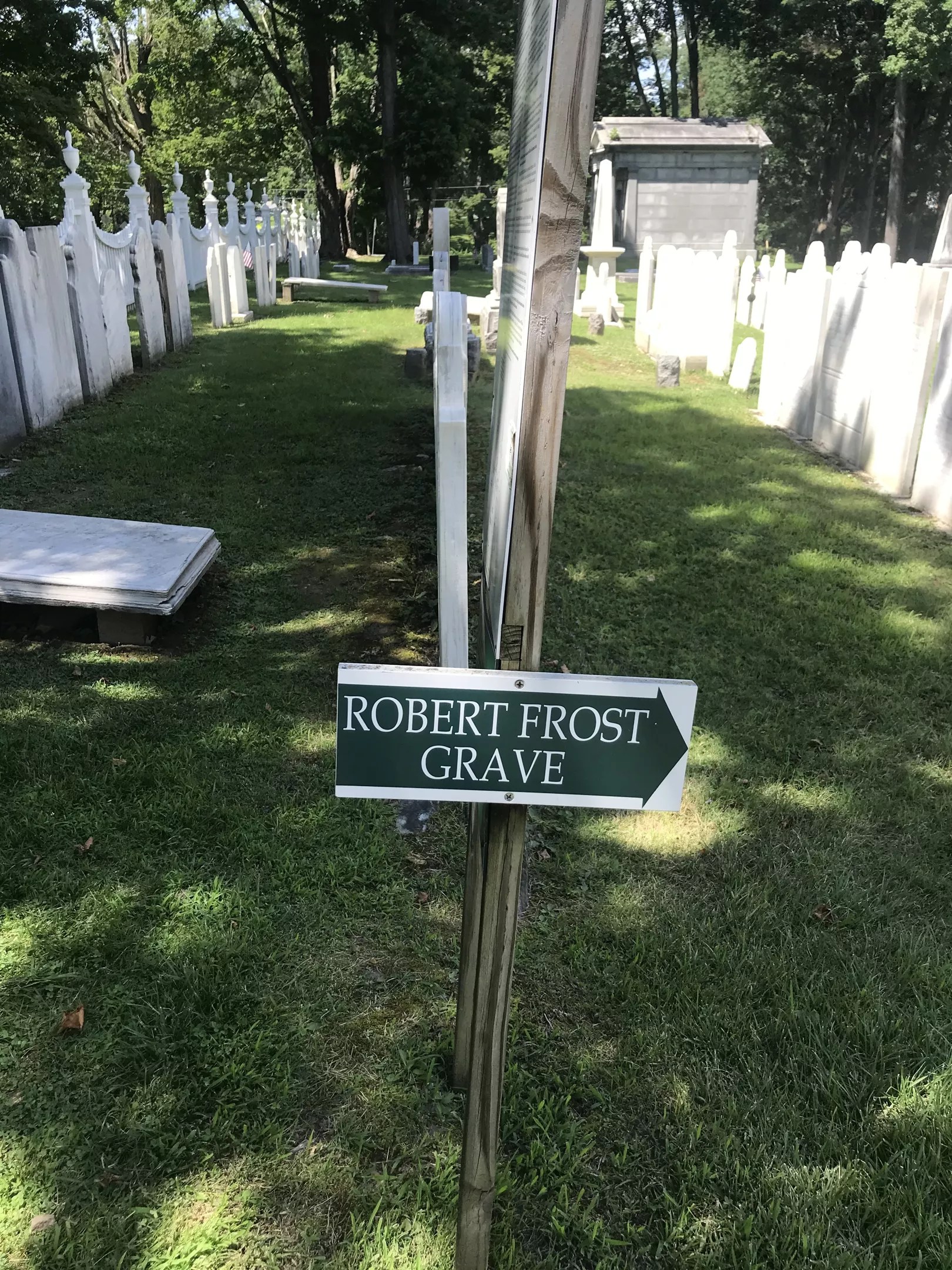
Deeper in the cemetery is the grave of Robert Lee Frost (1874-1963), Vermont’s first poet laureate. His gravestone is flat to the ground and etched with his name and the names of several family members.
Below the name of his wife, Elinor Miriam White, who preceded him in death by 25 years, is a line from a poem Frost wrote for their daughter’s wedding: “Together wing to wing and oar to oar.”
Beneath Frost’s name is the last line of another of his poems, and it’s the epitaph for the ages: “I had a lover’s quarrel with the world.”
Mary Ruefle, the current poet laureate of Vermont, has lived in Bennington since 1971. She has a quarrel with the keepers of the cemetery.
For decades, visitors to Frost’s grave left tributes at his gravesite — often coins and stones, Ruefle said. They were participating in a centuries-old custom practiced around the world: from the grave of singer Jim Morrison in Paris to that of poet Emily Dickinson in Amherst, Mass.
“It’s extraordinary and so moving,” Ruefle said of the tributes to Dickinson.
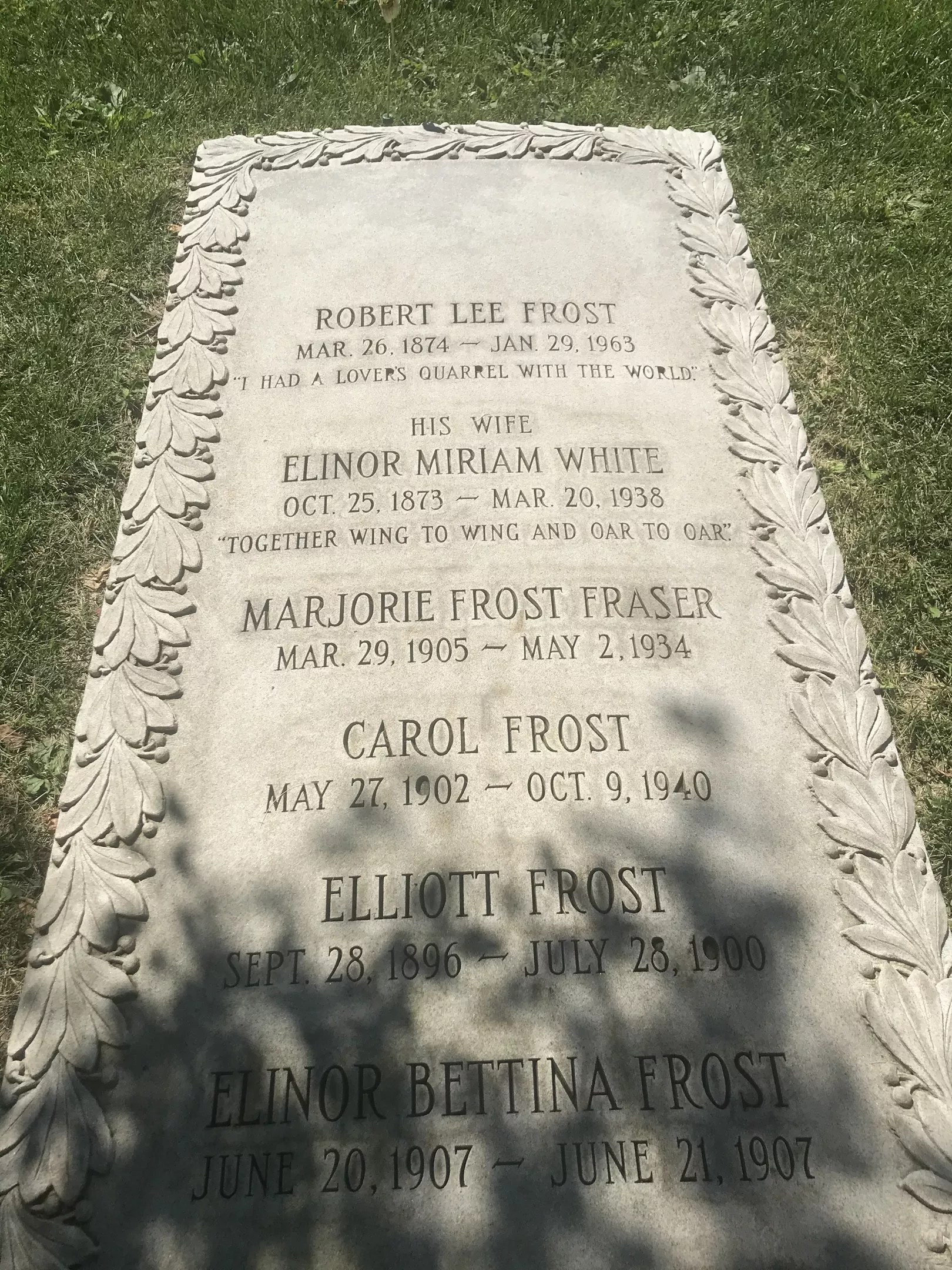
But a sign at Frost’s grave now forbids the practice in Bennington — and Ruefle said she’s outraged by the rule.
“As the poet laureate of Vermont, I would like to publicly state this is a horrific travesty of an ancient custom,” Ruefle said. “And it disgusts me.”
She called on the graveyard and church to reverse the policy. “I leave a tribute every time I go,” Ruefle said.
251 is a series of on-the-road stories, coming soon to a town near you.
Related Stories


Got something to say?
Send a letter to the editor and we'll publish your feedback in print!